After a trip to California for our 2025 summer heat escape, we returned to Colorado for 2026 - with an extension to Yellowstone and Grand Teton National Parks. Here is our route plan:
 |
Summer 2026 Trip Route Plan |
We departed a few days after our Winnebago Travato 2022KL turned 5 years old. The first two days were long drives to power through Texas and eastern Colorado. We stopped at St. Vrain State Park on the doorstep of the Rocky Mountains. Colorado was experiencing a heat wave, but at least the humidity was lower than home.
We spent the next four nights in Rocky Mountain National Park at Moraine and Glacier camprounds. Wildlife sighting were a little sparse compared to past visits as the heat had driven many animals up higher in the mountains.  |
| Elena & Paul in Rocky Mountain National Park |
 |
| Sprague Lake in Rocky Mountain National Park |
After traversing the
highest continuous paved road in the continental US across the park we stayed a night in
Stillwater on the west side before beginging the trip up to Tetons and Yellowstone. On the way we stopped at Sinks Canyon State Park near Lander,
WY. At some point the creek found a soft spot in the limestone wall and
cut an underground path through the wall. It re-emerges a bit downstream.
 |
| Water sinking at Sinks Canyon |
We stopped for a whitewater rafting trip on our way into Grand Teton NP. We rafted on the Snake River. We've rafted many rivers and this was the first time either of us got tossed overboard in a rapid. We hit a double wave at the Big Kauna and Elena was tossed out into the river. We got her back in and she was fine.
 |
Just after Elena's rescue, she was paddling again
|
We hiked around at Grand Teton, but our best wildlife sighting was going to/from our campground. We saw a large male Moose twice, and a female once. |
| Sunset behind the Tetons |
 |
| Bebop at Jackson Lake. |
 |
| Paul & Elena at the Tetons |
 |
| Paul & Elena at the Tetons |
Our next destination was Yellowstone. We booked five different camprounds around the park so we could take our time and visit many areas.
After Yellowstone, we made our way back south. We stopped at Flaming Gorge and drove the Sheep Mountain Geologic Loop. And we visited Dinosaur National Monument.
 |
| Grand Canyon of the Yellowstone |
In Colorado, we stayed a
couple of nights at Rifle Falls State Park. Our daughter flew out to
Denver and drove in to spend a few days with us there and in Glenwood
Springs.  |
| Rifle Falls, CO |
 |
| Elena at Rifle Falls |
 |
| Paul & Kendall at Rifle Falls |
In Glenwood, we hiked to Hanging Lake and did a rafting trip on
the Colorado River. We did the double Shoeshone Canyon trip where you
raft the rapids, drive the raft back up, and raft them again. Elena
stayed in the raft this time. |
| Paul, Elena, and Kendall at Hanging Lake |
 |
| Hanging Lake |
The following
three nights were spent in the Silver Queen campground in the Maroon
Bells Wilderness. There is no connectivity in there - just beautiful
mountains and streams. Elena and I hiked to Crater Lake, which is more
like Crater Puddle this year. Lakes and streams were way below normal on
most of our trip. The next morning I challenged myself with a 9.5 mile RT, 3,000 foot elevation gain hike up to Buckskin Pass. The hike STARTS at 9,500 feet elevation, so that last section feels a little light on oxygen. It's such a beautiful view from that pass, that's it is worth the effort.
 |
| Elena & Paul at Crater Lake |
 |
| Elena at Maroon Lake |
 |
| The Maroon Bells at Sunrise |
 |
Paul at the top of Buckskin Pass |
We added a new town to our list this year - Marble, CO. On our way to Marble we stopped and soaked in the free roadside Penny Hot Springs. We arrived in Marble and ate at one of only two restaurants there - Slow Groovin' BBQ. It was delicious, and they even had menu items for dogs. Bebop scarfed down a small bowl of brisket.We also hiked to the Yule Creek Falls. |
| Paul & Bebop at Yule Creek Falls |
The next morning we took a jeep tour to the old mining town of Crystal. The primary desination is the old Crystal Mill. The mill was built in 1893. The remaining structure is the water turbine penstock that powered an air compressor to run jackhamers for silver mining. The river has the cleanest, most beautiful water I have ever seen. Crystal is an appropriate name for it. We saw a bald eagle on a pole about 5 minutes into the tour, and turned around to see a juvinile on a wall about 20 feet behind us.
 |
| Elena & Paul at the Crytal Mill |
 |
| The Crystal Mill |
 | | Bald Eagle on pole |
 |
| Juvenile bald eagle on wall |
From Marble we headed to a stop we always make in CO - the town park campground in Telluride, CO. We often stay for 4 nights, and the van gets to rest. Everything is walkable - trails, the town, etc. The weather finally changed and the monsoon kicked back up. We had rain and clouds for most of visit, but the high temps stayed in the 60s. We hiked a few old favorites - Cornet Creek Falls, Bear Creek Falls, and Bridal Veil Falls (on our final day when the sky cleared).
 |
| Bear Creek Falls |
 |
| Bear Creek Falls |
 |
| Bridal Veil Falls |
 |
| Looking back toward Telluride |
 |
| Elena |
 |
| From behind Cornet Creek Falls |
After Telluride, we camped along the Uncompahgre River near Ridgway, CO. We
drove the million dollar highway through Ouray to a bit north of
Silverton. We boondocked at the start of the Ophir Pass Road in the mountains at about 10,000 feet
elevation. The photos are from a stop at Crystal
Lake, which is nearly empty. Everything is so dry.
 |
| At Crystal Lake north of Silverton, CO |
 |
| At Crystal Lake north of Silverton, CO |
To begin our final week I took on another challenging hike. This was another 3,000 foot climb to 12,500 feet. The destination was Columbine Lake. And it was worth it, as I've never seen an alpine lake with such a deep blue color. I did an entire blog on that hike with many additional photos. Blog Link.
 |
| Columbine Lake |
 |
| Columbine Lake |
 We departed Molas Lake and drove to Pagosa Springs for a couple of nights. We have many friends who live there full or part time, so we cna always find a driveway to camp in. The river was very low, like all the other rivers, creeks, and lakes on our trip. Tubing was not possible, but we did enjoy some nice soaks in the free riverside hot springs.
 We then headed to Echo Amphitheater and Abiquiu Lake for a night before the driving trek home - where the temperature is still outrageously hot (106ºF). At least we had a nice 6-week break from the heat. i just hope my neighbors haven't melted.
 |
| Stormy Skies |
 |
| Echo Amphitheater |
 |
| Pedernal with a glimpse of Abiquiu Lake |
 |
| Bebop watches the sunrise on Pedernal |
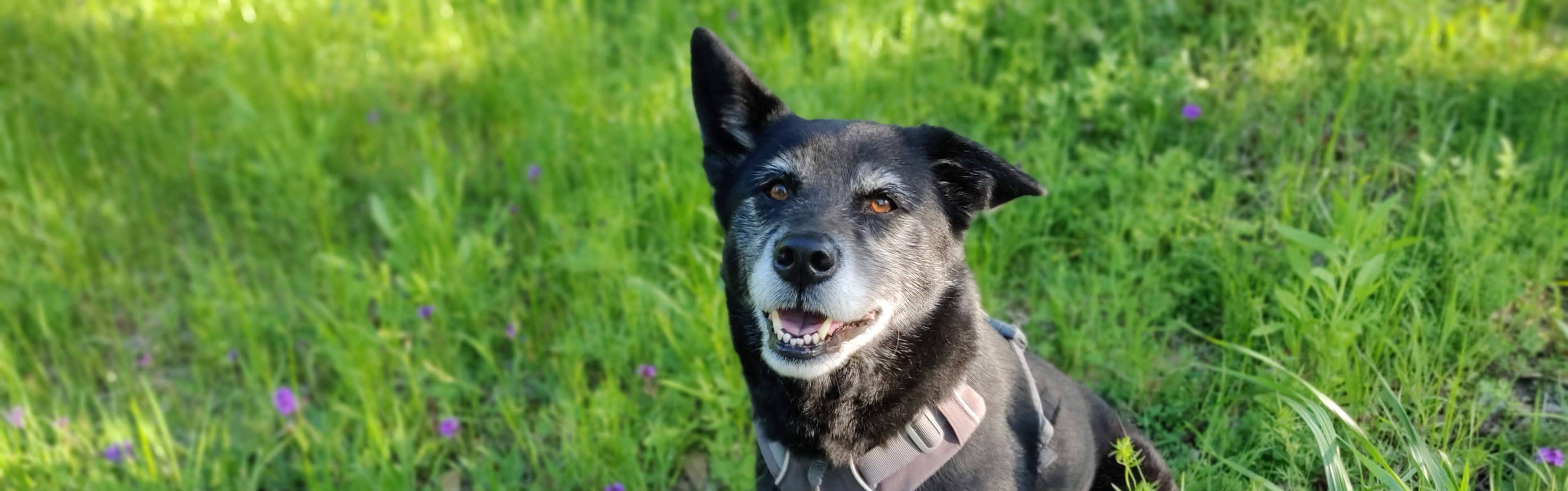
We plan these trips over 6 months in advance and everything ran smoothly. We had no issues with campgrounds, the van, bad weather, roads, . . . So many things went well. You have to have the right partner to be cooped up in a van for six weeks, and I do. Elena is a delight to travel with (and to be at home with), and that makes the trips so much more fun. Bebop is a perfect traveller too, and she serves as a campground and trail therepy dog for people who couldn't bring their dog, or recently lost their dog.
The trip highlighted several concerns. First, the climate chamge impacts were very visible with significantly reduced river/creek flows and depleated lakes. Temperatures were well above average everywhere. Continue to find ways to reduce your climate impact, and boycott the companies responsible for the large impacts and continued denial of the issue. And vote for people who get it, and are prepared to take action.
The continued attack on our shared park lands is also very visible. From reduced staffing to deferred projects, the parks experience is being compromised. Theft of the park service funds by the current administration, and the reductions in staff, are having a very negative impact on our parks. Vote in November to help reverse this tragic period in our nation's history. Now, for the data fans, here's our trip summary in endless detail:
DATA
Miles Driven: 4085 miles
Average miles/day: 95
Time Driving: 99 hours
Avg Speed: 41 mph
MPG: 17.1(vehicle calc); 16.3 (actual)
Gas Used: 251 gallons, average of 5.8 gallons/day
Gas Cost: $997 ($23/day) - avg of $3.97/gallon
Campground Cost: $1,337 (avg $31/day)
Food Cost Total: $,1084 (avg $25/day)
Total Trip Cost: $79/day
Paul


 We departed Molas Lake and drove to Pagosa Springs for a couple of nights. We have many friends who live there full or part time, so we cna always find a driveway to camp in. The river was very low, like all the other rivers, creeks, and lakes on our trip. Tubing was not possible, but we did enjoy some nice soaks in the free riverside hot springs.


